




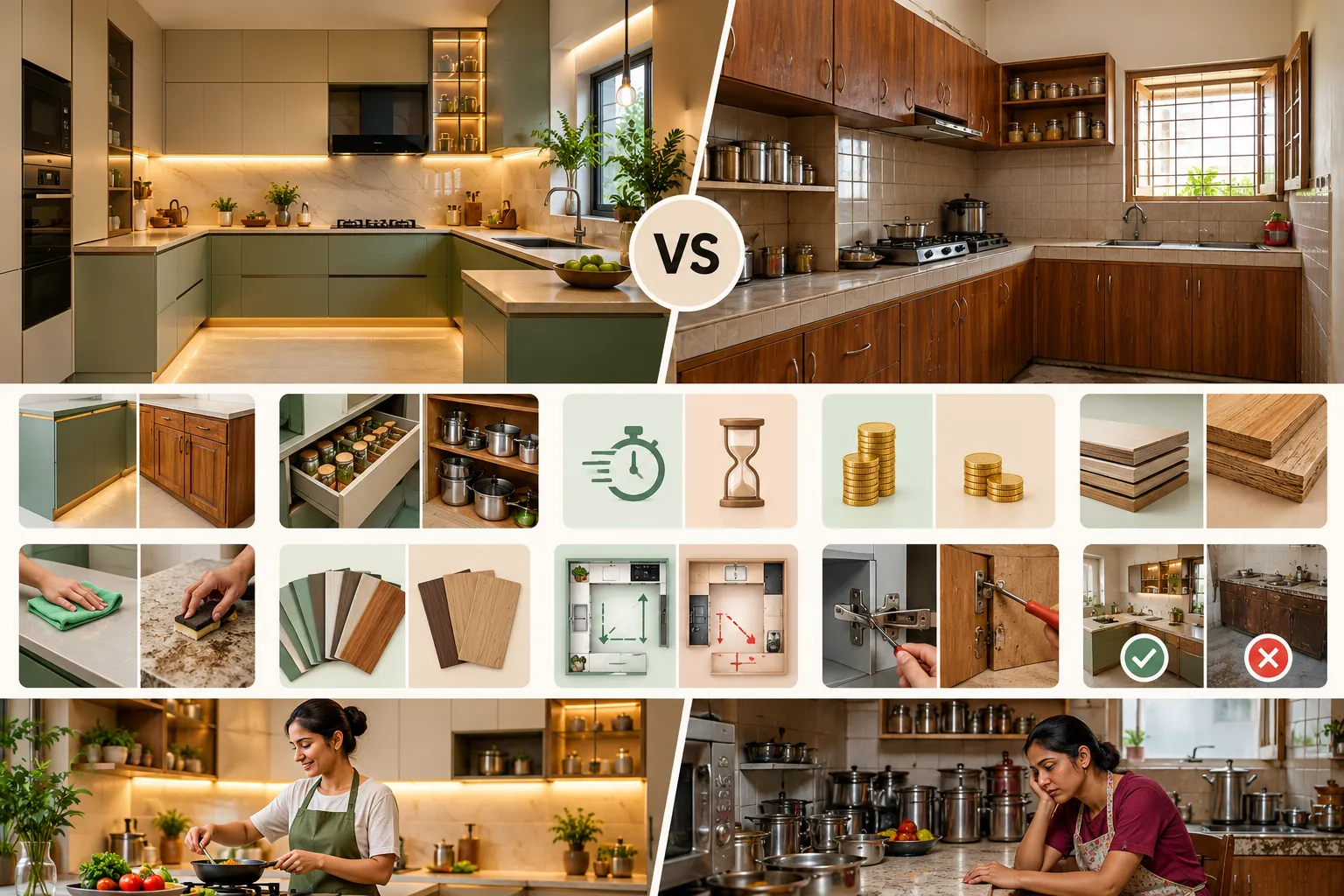
09 Oct Modular Kitchen vs Normal Kitchen: 10 Key Differences Every Homeowner Should Know
Planning a new kitchen for your home? One of the biggest decisions is choosing between a modular kitchen and a normal kitchen. Both have advantages, but the right choice depends on your space, budget, cooking habits, and long-term needs.
If you’re looking for an Interior designer in Wave City Ghaziabad, understanding these differences can help you avoid unnecessary expenses and design a kitchen that works beautifully every day.
A kitchen is more than a place to prepare meals. It’s where families begin their mornings, organize daily essentials, and spend time together. Whether you live in a compact apartment or a spacious independent home, thoughtful kitchen planning can make everyday life easier.
In this guide, Tanasha Interiors explains the 10 key differences between modular and normal kitchens to help you make an informed decision.
What Is a Modular Kitchen?
A modular kitchen is a modern kitchen system made using factory-manufactured cabinets, drawers, shelves, and storage units. These individual modules are assembled and installed according to your kitchen’s layout.
Modular kitchens are popular because they offer space-saving storage solutions, organized cabinets, contemporary finishes, and convenient access to cooking essentials.
Common modular kitchen layouts include:
- L-shaped modular kitchen: Suitable for many compact and medium-sized homes.
- U-shaped modular kitchen: Offers generous countertop and storage space.
- Parallel kitchen: Works well in narrow kitchens with two facing counters.
- Straight kitchen: Suitable for smaller spaces and simple layouts.
- Island kitchen: An option for spacious homes with sufficient walking clearance.
A professional modular kitchen designer in Wave City Ghaziabad can help you select a layout that suits your kitchen dimensions and everyday requirements.
What Is a Normal Kitchen?
A normal kitchen, also known as a traditional or carpenter-made kitchen, is usually constructed on-site using materials such as plywood, solid wood, masonry, tiles, and laminates.
Unlike modular kitchens, where cabinets are manufactured as separate units, traditional kitchens are built and fitted according to the available space.
Normal kitchens remain a practical option for homeowners who prefer conventional construction, highly customized carpentry, or a more controlled initial budget.
However, the final quality depends heavily on the materials, workmanship, fittings, and finishing techniques used.
Modular Kitchen vs Normal Kitchen: 10 Key Differences
1. Design and Overall Appearance
A modular kitchen usually offers a coordinated appearance with consistent cabinet dimensions, clean edges, and matching finishes.
Homeowners can choose from modern kitchen design ideas, matte laminates, acrylic shutters, wood-inspired textures, and handleless cabinet styles.
A normal kitchen can also look beautiful, but the outcome depends on the carpenter’s skills and finishing quality.
Which is better? Choose modular construction for a consistent factory-finished look. Choose traditional carpentry if your design requires unusual shapes or detailed handcrafted features.
2. Kitchen Storage and Organization
Storage is one of the most important differences between modular and normal kitchens.
Modular kitchens can include:
- Pull-out pantry units
- Deep drawers for pots and pans
- Corner storage accessories
- Cutlery organizers
- Built-in dustbin compartments
- Vertical storage for bottles and spices
These smart kitchen storage solutions help keep frequently used items accessible.
Traditional kitchens commonly use shelves and cabinets, although experienced carpenters can also incorporate modern organizers and pull-out fittings.
Which is better? A modular kitchen is convenient when you want integrated storage planning, especially in a compact space.
3. Installation Time
Modular kitchen components are generally manufactured before arriving at your home. Once the site is ready, installation mainly involves assembling and fitting the cabinets.
A traditional kitchen requires more cutting, fitting, finishing, and adjustments on-site.
As a result, modular kitchens often involve less on-site disruption, although the total project timeline must also account for measurements, manufacturing, delivery, countertops, and electrical or plumbing work.
Which is better? Modular kitchens are often preferable for homeowners who want to reduce on-site construction activity.
4. Cost and Budget Planning
When comparing modular kitchen cost vs normal kitchen cost, remember that the cheapest quotation may not provide the best long-term value.
Modular kitchen pricing depends on cabinet materials, shutter finishes, hardware, accessories, countertop selection, and installation.
Traditional kitchen costs depend on carpentry labour, materials, finishing, fittings, and construction time.
A basic carpenter-made kitchen may have a lower initial price. However, a modular kitchen can offer better cost predictability when the quotation clearly specifies all components.
Important tip: Ask for an itemized estimate covering cabinets, hardware, countertops, sink, installation, electrical work, and applicable taxes. This makes it easier to compare quotations fairly.
5. Durability and Material Quality
A common misconception is that every modular kitchen lasts longer than a normal kitchen.
In reality, durability depends on construction quality, material selection, moisture exposure, hardware, and maintenance.
For Indian homes, consider:
- BWR or BWP-grade plywood for areas exposed to moisture, selected according to the application.
- Good-quality hinges and drawer channels for frequent daily use.
- Proper edge banding to protect cabinet edges.
- Suitable countertop materials for heat, stains, and regular cleaning.
- Adequate ventilation to reduce moisture accumulation.
Both modular and carpenter-made kitchens can perform well when built using appropriate materials and workmanship.
Which is better? Prioritize specifications and construction quality rather than assuming one kitchen type is automatically more durable.
6. Cleaning and Maintenance
Indian kitchens often experience oil splashes, turmeric stains, steam, and frequent cooking.
Modular kitchens can be easier to maintain when they include smooth, wipe-clean surfaces, accessible drawers, and removable components.
Traditional kitchens can also be easy to clean, particularly when their surfaces are properly sealed and storage is thoughtfully designed.
For everyday convenience, choose easy-to-clean kitchen cabinets, a practical backsplash, accessible corners, and suitable finishes.
Which is better? A well-planned modular kitchen can simplify cleaning, but maintenance requirements depend on materials and design.
7. Customization and Flexibility
Traditional kitchens allow carpenters to build cabinets around irregular walls, unusual corners, and non-standard dimensions.
Modular kitchens also offer extensive customization through cabinet sizes, finishes, storage accessories, and layout combinations. However, some designs may require special manufacturing.
For homeowners who want a particular colour combination, integrated appliances, or specialized storage, both approaches can work.
Which is better? Traditional carpentry offers flexibility for unusual site conditions, while modular systems provide structured customization with consistent finishing.
8. Space Utilization
Space planning matters especially in apartments where every cabinet must serve a purpose.
A modular kitchen can incorporate space-saving kitchen cabinets, tall pantry storage, under-counter drawers, and corner units.
But efficient space utilization isn’t exclusive to modular kitchens. A skilled designer can create a highly functional traditional kitchen as well.
The most important considerations are the placement of the sink, stove, refrigerator, preparation counter, and frequently used utensils.
Which is better? Choose the kitchen design that provides comfortable movement and accessible storage without overcrowding the room.
9. Repairs and Replacement
In many modular kitchens, individual cabinet shutters, drawers, hinges, or accessories can be repaired or replaced without rebuilding the entire kitchen.
However, replacements may depend on the manufacturer’s module dimensions and availability of matching finishes.
Traditional kitchens can also be repaired locally, particularly when standard carpentry materials and fittings are used.
Which is better? Modular systems can simplify component replacement, while traditional kitchens may offer easier local repair options.
10. Long-Term Value and Everyday Convenience
Your kitchen should remain functional even as your family’s needs change.
A thoughtfully designed modular kitchen can offer organized storage, efficient movement, and a contemporary appearance.
A traditional kitchen can deliver excellent long-term value when it is well-built and maintained.
Neither option guarantees a higher property resale value. Homebuyers are more likely to appreciate a kitchen that is clean, functional, attractive, and in good condition.
Which is better? Choose based on everyday usability, material quality, and total ownership cost rather than appearance alone.
Modular Kitchen vs Normal Kitchen: Quick Comparison Table
| Feature | Modular Kitchen | Normal Kitchen |
|---|---|---|
| Construction | Factory-manufactured modules | Mostly site-built |
| Appearance | Consistent, coordinated finishes | Depends on workmanship |
| Storage | Integrated storage options | Customizable shelves and fittings |
| Installation | Usually less on-site work | More on-site carpentry |
| Initial Cost | Often higher | Can be more economical |
| Durability | Depends on materials and workmanship | Depends on materials and workmanship |
| Cleaning | Convenient with accessible units | Depends on layout and finish |
| Customization | Extensive within manufacturing constraints | Flexible for unusual spaces |
| Repairs | Individual components may be replaceable | Local carpentry repairs often possible |
| Best Suited For | Organized, contemporary kitchens | Custom-built and conventional kitchens |
Which Kitchen Is Better for Homes in Wave City, Ghaziabad?
If you’re designing or renovating a home in Wave City, the ideal kitchen should reflect your family’s lifestyle rather than simply following the latest design trend.
For compact apartments, a straight, L-shaped, or parallel kitchen may provide a practical balance between storage and movement.
For larger homes, a U-shaped kitchen or island layout may be worth considering if the available space permits comfortable circulation.
Before finalizing your kitchen design, consider these questions:
- How many people regularly use the kitchen?
- Do you prepare heavy Indian meals every day?
- Do you need additional storage for large utensils?
- Where will the refrigerator, microwave, and other appliances fit?
- Is there adequate chimney ventilation and natural airflow?
- What is your total budget, including fittings and installation?
Working with an experienced Interior designer in Wave City Ghaziabad can help you assess these requirements before construction begins.
5 Mistakes to Avoid When Planning a New Kitchen
1. Choosing appearance over functionality: Beautiful cabinets won’t compensate for insufficient countertop space or inconvenient storage.
2. Ignoring ventilation: Proper exhaust arrangements are essential for managing heat, smoke, and cooking odours.
3. Selecting materials only by price: Low-quality boards, fittings, or edge sealing can increase maintenance costs.
4. Forgetting electrical planning: Decide appliance locations and socket requirements before installing cabinets.
5. Comparing incomplete quotations: Confirm whether countertops, accessories, plumbing, electrical work, and installation are included.
Avoiding these mistakes can help you create a kitchen that looks attractive and works comfortably.
Why Choose Tanasha Interiors for Kitchen Design in Wave City, Ghaziabad?
Every home has its own layout, personality, and practical requirements. Your kitchen should reflect all three.
At Tanasha Interiors, under the creative leadership of Ms Tanasha, the focus is on creating interiors that balance aesthetics, functionality, and individual preferences.
From initial design concepts to project completion, Tanasha Interiors takes a client-focused approach to residential, commercial, and hospitality interior spaces across Delhi NCR.
Whether you’re planning a contemporary modular kitchen, upgrading an existing kitchen, or exploring a complete home transformation, thoughtful design planning can help you make better decisions about space, materials, and finishes.
If you’re searching for a modular kitchen designer in Wave City Ghaziabad, Tanasha Interiors can help you explore kitchen layouts and interior design solutions suited to your home.
Final Verdict: Modular Kitchen or Normal Kitchen?
So, which is better: a modular kitchen or a normal kitchen?
A modular kitchen may be the better option if you want coordinated finishes, organized storage, and reduced on-site carpentry work.
A normal kitchen may suit you if you prefer conventional construction, unusual custom dimensions, or a potentially lower starting budget.
Ultimately, the best kitchen is one that makes cooking easier, fits your budget, and complements your home.
Transform Your Kitchen with Tanasha Interiors
Planning a new kitchen or renovating your existing space in Wave City, Ghaziabad?
Tanasha Interiors can help you explore functional layouts, stylish finishes, and practical interior design solutions that match your needs.
Book a Kitchen Design Consultation Today!
Frequently Asked Questions
1. Is a modular kitchen better than a normal kitchen?
A modular kitchen is often convenient for organized storage, consistent finishing, and faster on-site assembly. However, a well-built traditional kitchen can be equally functional and durable.
2. How much does a modular kitchen cost in Wave City, Ghaziabad?
The cost depends on kitchen dimensions, cabinet materials, finishes, hardware, countertops, and accessories. A site assessment and itemized quotation are the best ways to determine a realistic budget.
3. Which kitchen is best for a small apartment?
Straight, L-shaped, and parallel kitchens can work well in compact apartments. The best choice depends on room dimensions, appliance placement, and available circulation space.
4. Can I convert my normal kitchen into a modular kitchen?
Yes, many traditional kitchens can be upgraded with modular cabinets and storage units. The feasibility depends on the existing countertop, plumbing, electrical points, and structural condition.
5. Which kitchen material is best for Indian cooking?
Suitable plywood grades, properly sealed edges, durable laminates, quality hardware, and practical countertops are commonly considered for Indian kitchens. Material selection should reflect moisture exposure, usage, and budget.
6. How do I choose a modular kitchen designer in Wave City Ghaziabad?
Look for a designer who understands your space, provides layout options, explains material specifications, offers transparent quotations, and discusses installation and after-sales requirements.

Sorry, the comment form is closed at this time.